- navAI
- Posts
- South Korea Wants to Pay Citizens from AI Profits, Robots Are Getting Hands, and the Musk-Altman Trial Reaches Its Climax ⚡
South Korea Wants to Pay Citizens from AI Profits, Robots Are Getting Hands, and the Musk-Altman Trial Reaches Its Climax ⚡
AI Spotlight keeps you up-to-speed on the latest cool stuff in AI and tech. This week, South Korea shook global markets by proposing an AI "citizen dividend," the robotics race went into overdrive with Meta's acquisition and a breakthrough demo from Genesis AI, and the biggest trial in tech history reached its peak with Altman and Nadella on the stand.

Fiorenzo Comini
May 14, 2026
In today's email:
South Korea Proposes AI "Citizen Dividend" — Crashes Its Own Stock Market 🇰🇷
The Physical AI Race Heats Up: Meta Buys Robotics Startup, Genesis AI Goes Full-Stack 🤖
Musk vs. Altman Trial Update: Altman, Nadella, and Sutskever All Testify ⚖️
Tutorial: How to Build a Custom AI Agent with CopilotKit (No Backend Needed)
📢 Top AI Tools of the Week
South Korea Proposes AI "Citizen Dividend" Crashes Its Own Stock Market 🇰🇷

In the most dramatic intersection of AI policy and financial markets this year, a top South Korean government official proposed that the country should pay every citizen a "dividend" from AI-driven profits — and markets immediately panicked. The benchmark Kospi index plunged as much as 5.1% before recovering, wiping billions in value from Samsung and SK Hynix in hours.
The lowdown:
The proposal: Presidential policy chief Kim Yong-beom wrote on Facebook that AI profits are built on industrial infrastructure the entire nation helped create over 50 years, and "part of those fruits should be structurally returned to all citizens." He compared it to Norway's sovereign wealth fund, which channels oil revenues back to society.
Market panic: Investors feared a new windfall tax on corporate profits. Samsung and SK Hynix shares dropped sharply before Kim clarified he meant tapping "excess tax revenue" generated by the AI boom — not imposing new corporate taxes. The government confirmed the comments were Kim's personal opinion, not formal policy.
Why it matters beyond Korea: Samsung is forecast to post roughly $220 billion in operating profit this year, and SK Hynix around $160 billion. Their combined corporate tax bill alone could exceed Korea's entire projected national corporate tax collection for 2026. The AI chip boom has made a handful of companies extraordinarily rich while broader society hasn't shared in those gains.
Samsung strike looming: The proposal comes as over 30,000 Samsung union members have taken to the streets demanding workers get 15% of operating profit. An 18-day general strike starting May 21st could cost $700 million per day and cut foundry output dramatically.
Why It Matters: This is the first time a major economy has seriously proposed redistributing AI profits directly to citizens — and the market reaction shows how sensitive the issue is. As AI concentrates wealth among a small number of companies, governments around the world are grappling with the same question: who actually benefits from the AI revolution? South Korea's experiment, even if it remains just a proposal, could become a blueprint that other nations follow. The Samsung union strike could further escalate tensions between AI profits and worker demands.
The Physical AI Race Heats Up: Meta Buys Robotics Startup, Genesis AI Goes Full-Stack 🤖

While most AI headlines focus on chatbots and language models, the real next frontier is physical AI — robots that can see, reason, and act in the real world. This month, Meta acquired a humanoid robotics startup, and Genesis AI (backed by Khosla Ventures) unveiled a full-stack robotics demo that stunned the industry.
Key Highlights:
Meta acquires ARI: Meta bought Assured Robot Intelligence (ARI), a startup building foundation models for humanoid robots to perform physical labor like household chores. ARI's team, including co-founders, will join Meta's Superintelligence Labs under Alexandr Wang. Meta believes training AI in the physical world is essential for achieving AGI.
Genesis AI goes full-stack: Khosla-backed Genesis AI unveiled a demo showing its robots performing complex tasks like lab work and object manipulation. The breakthrough isn't just the robot — it's the full system: a sensor-loaded glove that mirrors a human hand, collecting training data without the "embodiment gap" that plagues robotics research. Their GENE-26.5 model uses massive simulation to iterate rapidly.
Yann LeCun's $1B bet on "world models": AMI Labs, founded by former Meta chief AI scientist Yann LeCun, raised Europe's largest-ever seed round ($1.03 billion at $3.5 billion valuation) to build AI that understands physical reality through sensors and cameras rather than text prediction. Backed by Nvidia, Bezos Expeditions, Samsung, and Toyota Ventures, LeCun believes LLMs are a "statistical illusion" and world models are the path to true intelligence.
The broader trend: NVIDIA launched a full healthcare robotics platform at GTC 2026. Goldman Sachs projects the humanoid robotics market could reach $38 billion by 2035, while Morgan Stanley estimates it could hit $5 trillion by 2050.
Why It Matters: The AI industry is splitting into two races: the language model race (OpenAI, Anthropic, Google) and the physical AI race (Meta, Genesis, AMI Labs, Boston Dynamics). The companies that crack physical AI — robots that can work in hospitals, factories, and homes — will unlock an economic opportunity that dwarfs chatbots. LeCun's billion-dollar bet against LLMs adds a fascinating contrarian angle: what if the biggest AI companies are climbing the wrong mountain?
Musk vs. Altman Trial Update: Altman, Nadella, and Sutskever All Testify ⚖️📈

The trial of the decade reached its most dramatic chapter this week as OpenAI CEO Sam Altman, Microsoft CEO Satya Nadella, and co-founder Ilya Sutskever all took the stand. The jury could begin deliberations as early as this week.
Key Highlights:
Altman's defense: Altman testified for four hours, arguing that Musk "abandoned" OpenAI and what he really wanted was total control. "I was extremely uncomfortable with it," Altman said of Musk's desire for majority control. He characterized the nonprofit as "left for dead" after Musk walked away in 2018.
Nadella reveals Microsoft's fears: Microsoft's CEO testified that he feared his company was becoming too dependent on OpenAI — comparing it to how IBM lost its edge. Internal emails showed he wrote "Better to be an investor and not even take all this execution risk!" Microsoft has now spent over $100 billion on OpenAI commitments, but the partnership is no longer exclusive.
Sutskever's key line: Co-founder Ilya Sutskever, who briefly ousted Altman in 2023, testified there was never a promise that OpenAI would remain a nonprofit, delivering the trial's most quotable line: "The mission of OpenAI is larger than the structure."
Closing arguments expected soon: The liability phase should wrap up by May 21, with the jury's verdict being advisory — Judge Gonzalez Rogers will make the final decision.
Why It Matters: This trial is exposing the messy origin story of the AI revolution. Regardless of the verdict, the testimony has revealed how fragile the relationships were between the people who built the world's most important AI company — and how much money, ego, and control were at stake from the very beginning. The outcome could reshape OpenAI's corporate structure and IPO plans.
Tutorial: How to Build a Custom AI Agent Inside Your App with CopilotKit 🛠️

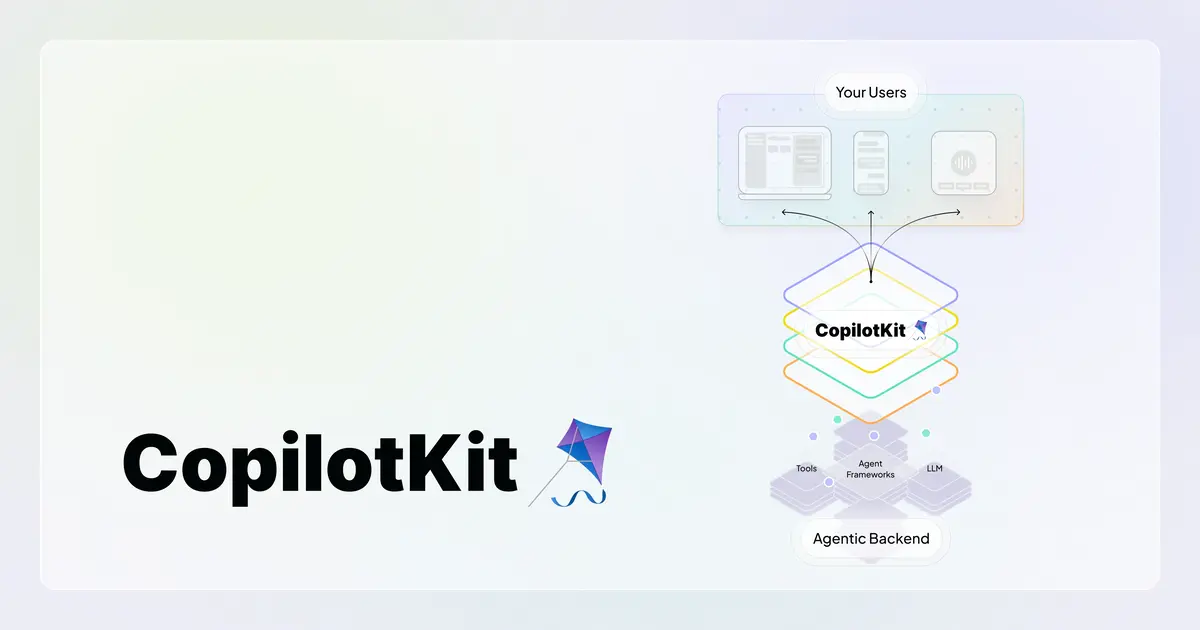
AI agents are everywhere in 2026, but most still feel like chatbots bolted onto the side of an app. CopilotKit is an open-source framework that lets you embed AI agents directly into your application's UI — so the agent can actually see and interact with your interface, not just chat in a sidebar. Here's how to get started:
Step 1: Install CopilotKit Add CopilotKit to your React project: npm install @copilotkit/react-core @copilotkit/react-ui. CopilotKit works with any LLM backend — OpenAI, Anthropic, or open-source models via Ollama.
Step 2: Wrap Your App Wrap your main application component with the CopilotKit provider. This gives the AI agent awareness of your app's current state and UI context. The agent can now "see" what the user is looking at.
Step 3: Define Actions Create actions the agent can take within your app — like updating a chart, filtering a table, creating a new item, or navigating between pages. CopilotKit uses a simple action definition format that maps natural language commands to your app's functions.
Step 4: Add the AI Interface Choose how the agent appears: as a sidebar chat, a popup, or fully embedded in your UI. The key difference from a regular chatbot is that CopilotKit agents can generate dynamic UI components — like rendering a pie chart instead of describing data in text.
Step 5: Test and Iterate Run your app and test natural language commands. Ask the agent to "show me revenue by category as a chart" or "filter the table to show only high-priority items." Refine your action definitions based on what users actually ask for.
Pro Tip: CopilotKit just launched an open protocol called AG-UI (Agent-User Interaction Protocol) that standardizes how AI agents communicate with frontends. If you're building for enterprise, this means your agent can work across different app frameworks — not just React.